
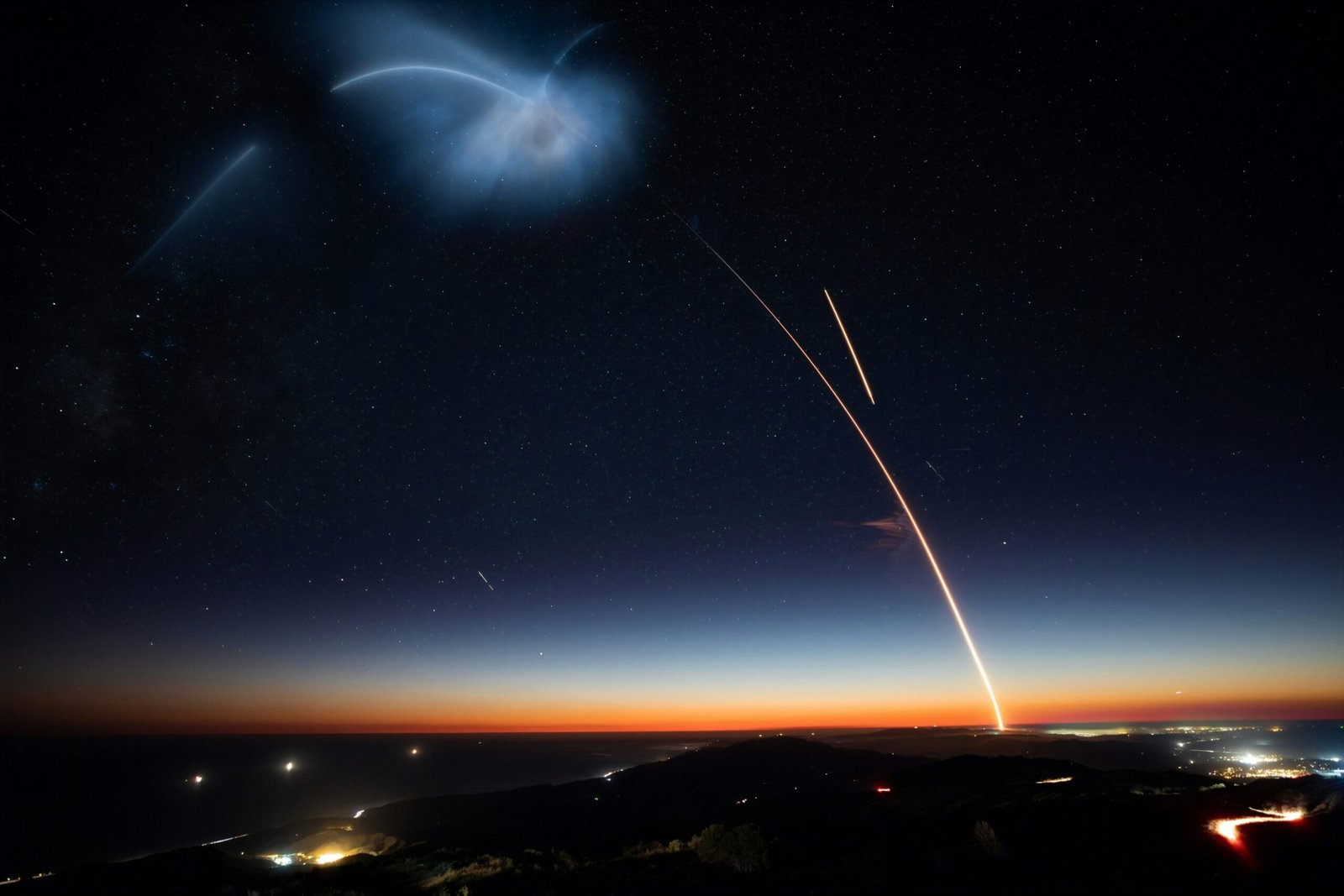

The financial world is treating the most anticipated stock market debut in history like a foregone conclusion. Following the highly anticipated SpaceX S-1 filing public release, Wall Street is preparing for an institutional roadshow on June 4, aiming for a historic Nasdaq listing under the ticker symbol SPCX as early as June 12, 2026. The target valuation sits between $1.75 trillion and $2 trillion. If it prices at the top of that range, Elon Musk’s rocket giant will debut as one of the ten most valuable companies on earth, pacing alongside Nvidia and Apple.
But past the triumphant headlines, the underlying data reveals a massive paradox. The filing shows that SpaceX is asking public markets to buy into a business valued at over 100 times its annual sales, despite posting a staggering $4.94 billion net loss for full-year 2025 and a massive $4.28 billion net loss in the first quarter of 2026 alone.
When you strip away the rocket smoke, the data exposes a profound truth: Wall Street isn’t pricing an aerospace hardware company. This is a hyper-leveraged infrastructure play on artificial intelligence disguised as a satellite network.
The Meaning of the S-1 Registration Statement
To understand what is happening behind the scenes, you first have to understand the paperwork.
What is an S-1 Filing? An S-1 registration statement is a mandatory, deeply detailed legal document that a private company must file with the SEC before it can sell stock to the public on an open exchange like the Nasdaq. It acts as a corporate x-ray, pulling back the curtain on a company’s real revenues, secret debts, operational segment metrics, and underlying business vulnerabilities that are normally kept hidden from public view.
For years, SpaceX operated as a private entity, self-funding through venture capital and private equity tender offers—such as its December 2025 transaction that valued the company at roughly $800 billion. The new S-1 filing marks the first time global investors can inspect the audited balance sheets of the world’s dominant aerospace power.
The Reality Check: The Launch Business vs. Starlink
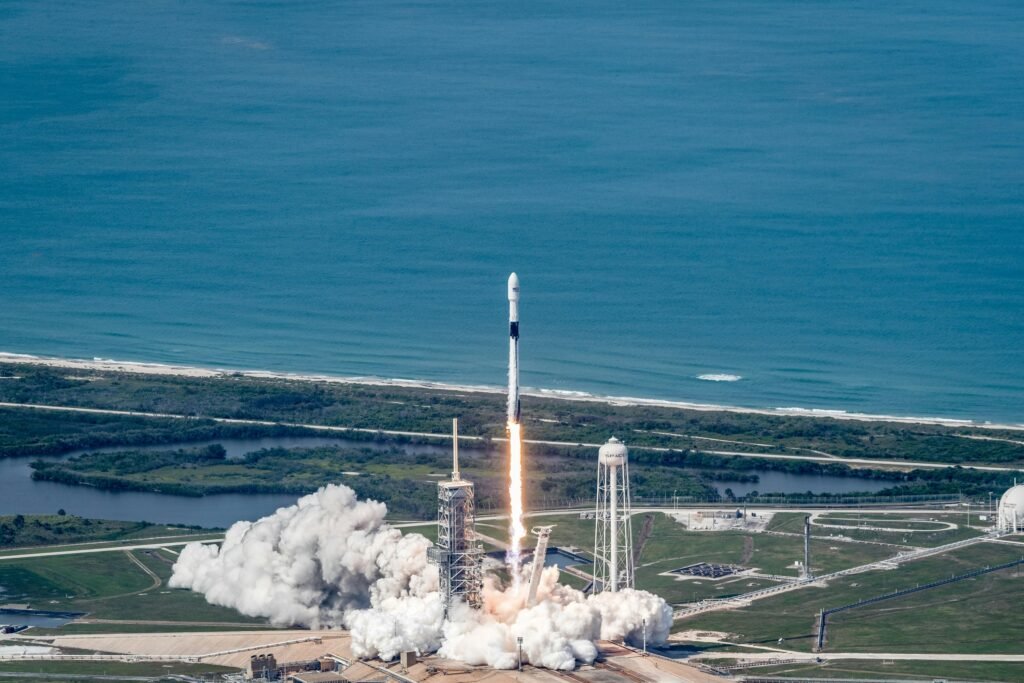
The mainstream narrative says that SpaceX is valuable because it builds the world’s most sophisticated reusable rockets. The technical achievements are real; the recent Starship iteration successfully executed complex orbital testing over the Indian Ocean.
However, the S-1 documentation establishes that rockets are no longer the primary economic engine driving the company’s financial growth. Last year, SpaceX generated $18.67 billion in consolidated revenue. Over 61% of that—$11.39 billion—was generated exclusively by the Connectivity segment, better known as Starlink.
Understanding Segment Metrics: In corporate accounting, a segment refers to a distinct, independent branch of a business that generates its own revenue and carries its own costs.
The S-1 shows that the core Space (Launch) segment generated $4.09 billion in revenue, but it is a lower-margin business operating at an active loss due to the massive capital requirements of rocket development and hardware depreciation.
Meanwhile, Starlink is the cash cow, delivering $4.4 billion in operating profit. Starlink’s recurring subscription model is effectively keeping the lights on, acting as a financial foundation that offsets the heavy hardware burn rate of the aerospace division.
The AI Pivot: Why the $2 Trillion Valuation Exists
If the launch business operates at a loss and Starlink is a steady utility network, how does Elon Musk justify a $2 trillion valuation—more than double its private valuation from six months ago? The answer is hidden in an astronomical calculation: the Total Addressable Market (TAM).
What is Total Addressable Market (TAM)? TAM represents the absolute maximum amount of annual revenue a company could theoretically generate if it captured 100% of every market sector it chooses to compete in.
The Trillion-Dollar Breakdown of the SpaceX S-1
In the prospectus summary, SpaceX claims a global action market size of $28.5 trillion. But when you examine the exact breakdown, the real strategy becomes crystal clear:
- Traditional Space and Rocket Launches: $370 billion
- Global Satellite Connectivity: $1.6 trillion
- Artificial Intelligence Infrastructure: $26.5 trillion
Artificial intelligence represents over 90% of SpaceX’s entire forward-looking valuation thesis. Following its February 2026 merger with xAI, the creator of the Grok model, SpaceX is aggressively positioning itself as the physical backbone of global computing.
The entity is burning through massive sums of cash to scale up terrestrial data center operations, including the massive Colossus facility housing hundreds of thousands of Nvidia GPUs. In Q1 2026, out of $10.1 billion in total corporate capital expenditures, a staggering $7.72 billion was poured directly into AI development.
The long-term vision is to launch low-Earth-orbit AI compute satellites starting in 2028, running massive model processing in space where solar energy is abundant and natural vacuum cooling removes the energy limitations of land-based infrastructure. It is a bold, futuristic play, but the AI business unit currently drives the company into deep negative territory, posting a massive $6.35 billion operating loss last year.
The Retail Investor Risk
For retail investors intending to trade the ticker SPCX on listing day, the dual-class share structure listed in the prospectus demands careful study.
What is a Dual-Class Share Structure? This is an equity arrangement where a company issues two distinct classes of stock. Class A shares are sold to the public and carry exactly one vote per share. Class B shares are held exclusively by company insiders and carry 10 votes per share, allowing leadership to maintain absolute voting control over all corporate decisions regardless of how much public stock is issued.
The filing confirms that Elon Musk retains dominant voting power through his Class B holdings, meaning he can unilaterally elect the board of directors and control major corporate shifts without any accountability to public shareholders.
Furthermore, the offering structure is unusual. Up to 30% of the public stock float is reportedly being directed straight to everyday retail buyers through consumer brokerage apps. Because SpaceX is only floating a very small percentage of its total equity to the public, this high retail allocation combined with massive public hype is designed to trigger a sharp buying squeeze when trading starts on June 12.
Additionally, current market indexes will be systematically forced to purchase billions of dollars of SPCX shares to adjust their portfolios due to new cap-weighting rules for massive public arrivals. This creates an environment where institutional early investors and venture capital firms can secure massive exits, while public retail buyers absorb the immense financial risk of an AI operation that is currently burning cash at a historic rate.
The Strategic Conclusion
SpaceX is undeniably a generational enterprise reshaping humanity’s technological capabilities. But from a strict financial analysis, an investment is only as good as the price you pay for it.
When the market opens next month, you are not buying a traditional aerospace business or a satellite internet network. You are making a hyper-leveraged, long-term bet on space-bound artificial intelligence architecture. If you choose to trade the hype, ensure your investment strategy is built on cold data, not just the emotional gravity of a historic launch.