
The personal computer landscape is undergoing its most radical transformation in decades. At Computex 2026, NVIDIA CEO Jensen Huang formally announced a massive entry into the consumer desktop and laptop processor market: the NVIDIA RTX Spark. Developed in a high-profile architectural partnership with MediaTek, this new system-on-chip (SoC) isn’t just another incremental upgrade. It is an absolute powerhouse engineered from the ground up to bring unprecedented local artificial intelligence, gaming, and creative processing directly to Windows on ARM devices. If you have been waiting for a true alternative to traditional x86 processors, this hardware blueprint demands your attention.
Fusing Grace and Blackwell: The Hardware Specs
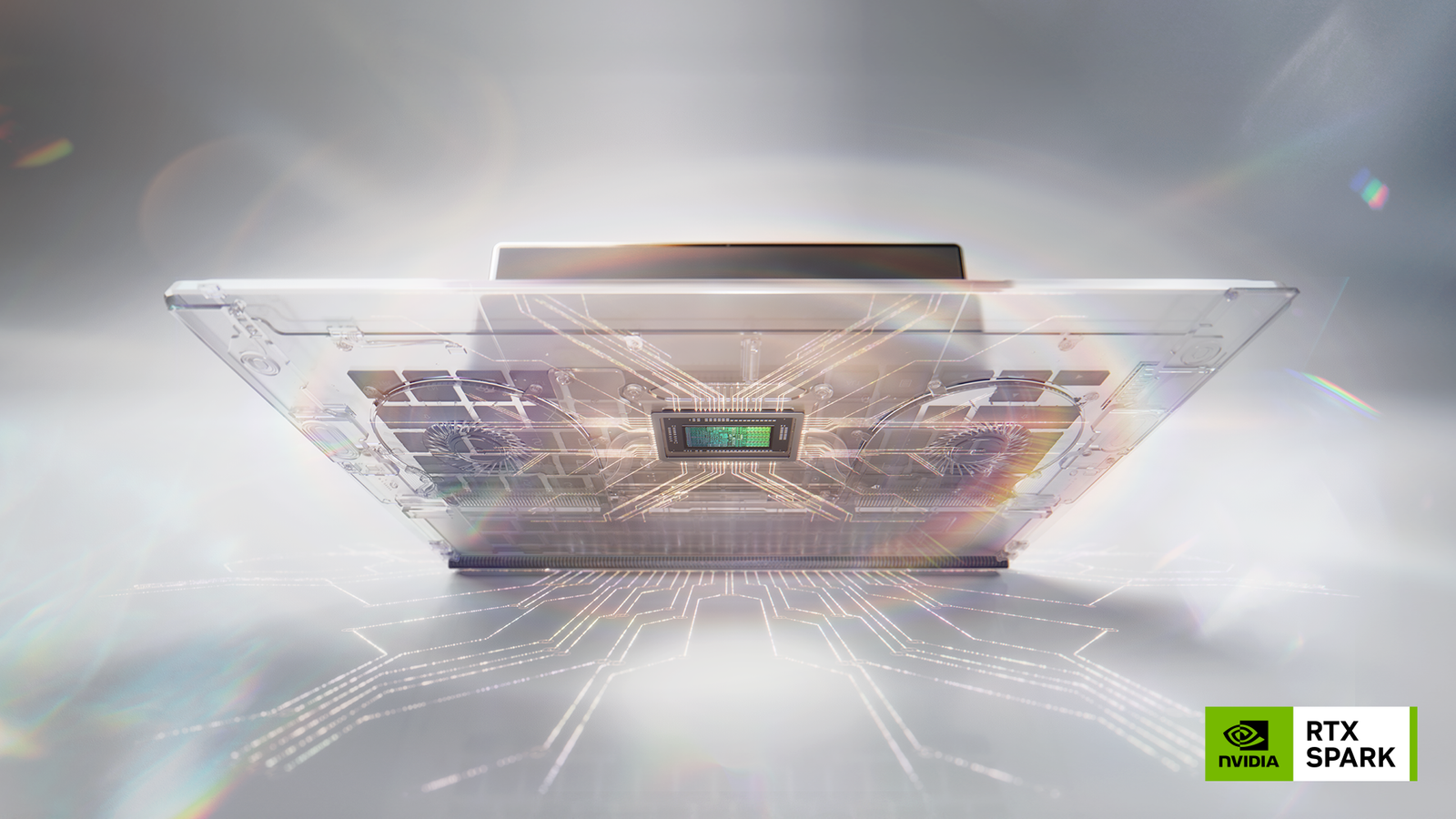
Instead of relying on standard CPU architectures, the NVIDIA RTX Spark functions as a custom “superchip” that fuses two of NVIDIA’s most powerful enterprise architectures via an ultra-fast NVLink-C2C interconnect. The physical package integrates an elite, 20-core Arm-based NVIDIA Grace CPU—fine-tuned by MediaTek’s power-efficiency engineers—with a cutting-edge NVIDIA Blackwell RTX graphics engine.
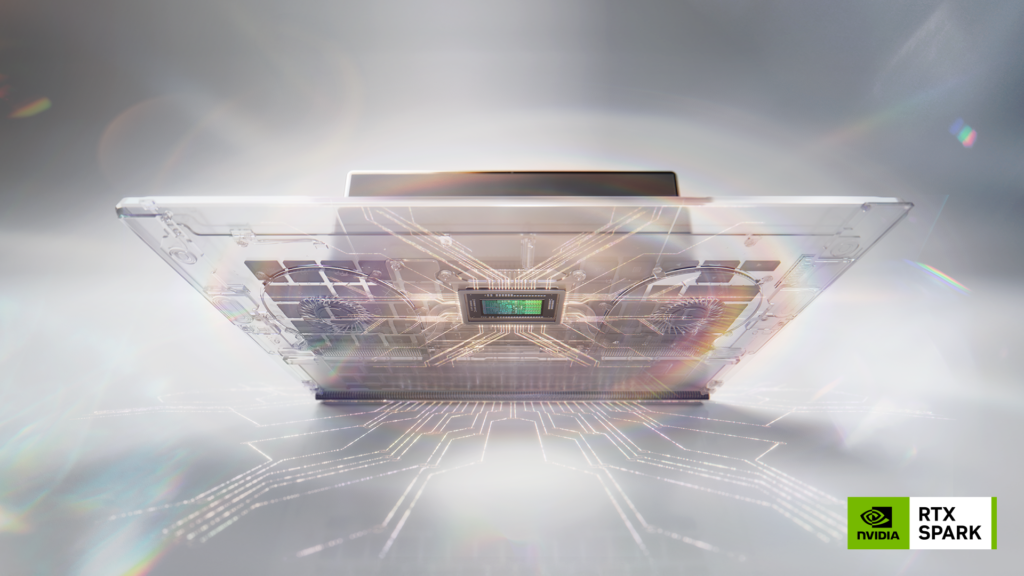
By fabricating this highly integrated architecture on TSMC’s advanced semiconductor nodes, the platform delivers immense local computing power while operating on an ultra-low power profile. The Blackwell-based graphics side boasts 6,144 CUDA cores alongside fifth-generation Tensor Cores operating with highly efficient FP4 precision. For hardware enthusiasts, this means desktop-class ray tracing, the complete DLSS suite, and elite frame-generation tools will now run natively inside exceptionally thin-and-light laptop chassis.
Built for the Age of Autonomous AI Agents
What sets the NVIDIA RTX Spark apart from competitive silicon is its memory subsystem. MediaTek designed a proprietary, high-bandwidth memory controller capable of supporting up to 128GB of ultra-high-speed unified memory. Because this massive pool of RAM is shared directly between the 20 CPU cores and the Blackwell GPU, data bottlenecks are virtually eliminated.
This architectural choice allows the platform to pump out up to 1 Petaflop of local FP4 AI processing performance. In practical terms, while standard AI PCs require an active internet connection to process complex requests via the cloud, a system running an RTX Spark chip can run highly advanced, 120-billion-parameter language models and automated AI agents entirely locally on the device, ensuring total data privacy and zero latency.
Availability and OEM Partnerships
Windows users won’t have to wait very long to get their hands on this new class of hardware. NVIDIA and Microsoft have confirmed a coordinated launch window for the fall of 2026. The initial rollout will see more than 30 distinct laptop variations and 10 ultra-efficient mini desktop configurations hit retail shelves. Major manufacturing partners—including Asus, Dell, Lenovo, HP, MSI, and Microsoft’s own premium Surface lineup—are already finalizing production models built around this game-changing silicon. The era of true local personal supercomputing is officially here.