
Table of Contents
Unified memory is a computer memory design where the CPU, GPU, and other processors share a single pool of memory instead of each having its own separate, dedicated memory. That single change removes a lot of the copying and waiting that slows traditional computers down, which is why unified memory has quietly become the standard in everything from laptops to AI supercomputers.
Key takeaways
- Unified memory combines what used to be separate RAM (for the CPU) and VRAM (for the GPU) into one shared pool.
- It cuts out the step where data gets copied back and forth between those two pools, which saves time and power.
- Apple Silicon, PlayStation 5, Xbox Series X/S, and Nvidia’s Grace Blackwell AI chips all use some form of unified memory.
- The trade-off is flexibility: unified memory is usually fixed at the point of purchase and can’t be upgraded later.
- As of August 2026, Apple’s newest chips push unified memory bandwidth past 1.2 terabytes per second, and Nvidia’s AI hardware uses it to fit huge language models into a single memory space.
What is unified memory?
In a traditional computer, the processor (CPU) and the graphics card (GPU) each get their own separate memory. The CPU uses system RAM. The GPU uses its own dedicated memory, usually called VRAM. These two pools sit in different physical locations and don’t talk to each other directly.
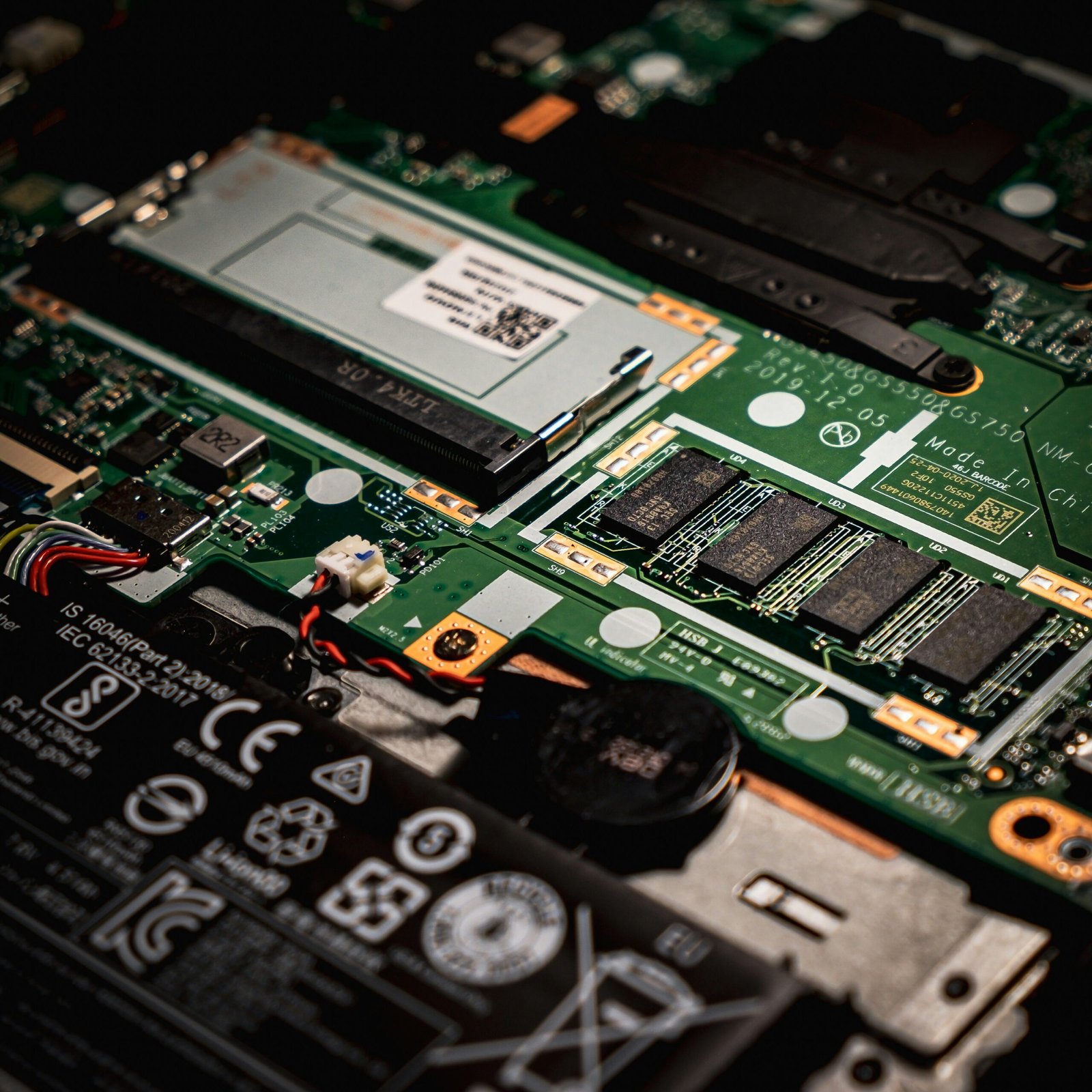
Unified memory changes that setup. Instead of two separate pools, the CPU, GPU, and often other components like a neural engine or AI accelerator all draw from one shared pool of memory, sitting physically close to (or directly on) the same chip package. Any part of the processor can read or write to that memory without needing its own private copy.
This is often shortened to UMA, for unified memory architecture. It isn’t a brand-new idea — mobile phones and integrated graphics chips have used lightweight versions of it for years — but it’s become the headline feature of modern high-performance computing, largely because of how aggressively Apple, Sony, Microsoft, and Nvidia have all adopted it since 2020.
How unified memory actually works
To understand why unified memory matters, it helps to see what it replaces.
The old way: two separate memory pools
On a traditional PC with a discrete graphics card, here’s roughly what happens when you’re doing something graphically demanding, like editing a 4K video:
- The CPU pulls the video data into system RAM.
- To let the GPU work on that data, the system has to copy it from RAM into the GPU’s own VRAM.
- Once the GPU finishes processing, results often get copied back.
Each of those copy operations takes time and energy, and because the same data can temporarily exist in two places at once, the system needs more total memory than the task strictly requires.
The unified way: one pool, shared access
With unified memory, that copying step mostly disappears. The CPU and GPU are both looking at the same physical memory, so when the CPU hands a task to the GPU, no transfer is needed — the GPU can just start reading from where the data already sits. This is possible because unified memory is typically packaged directly onto, or immediately next to, the processor itself, connected through very short, very high-bandwidth pathways rather than sitting elsewhere on the logic board.
The practical results are lower latency, less energy spent moving data around, and no need to plan a separate memory budget for graphics work.
Where you’ll find unified memory today
Unified memory isn’t a single company’s technology — several major players have converged on the same basic idea, each for slightly different reasons.
Apple Silicon (Mac and iPad)
Apple made unified memory architecture the centerpiece of its shift away from Intel processors, starting with the M1 chip in 2020. Every Mac and iPad running Apple Silicon now uses a single pool of memory shared between the CPU, GPU, and Neural Engine.
The pace of improvement has been steep. Apple’s last Intel-based MacBook Pro topped out around 41.6GB/s of memory bandwidth. As of this month, Apple’s newly announced M6 and M5 Ultra chips push that dramatically higher: M5 Ultra supports up to 512GB of unified memory with bandwidth around 1.2TB/s, achieved by fusing four chip dies together with an interconnect Apple calls UltraFusion, running at over 4.4TB/s between dies. The more mainstream M6 chip, aimed at machines like the Mac mini, offers up to 170GB/s of unified memory bandwidth — still a large jump for an entry-level chip.
The catch, which Apple has kept consistent since the M1, is that this memory is fixed at purchase. There’s no aftermarket upgrade path, since the memory isn’t a separate, swappable component — it’s built into the same package as the processor.
Game consoles: PlayStation 5 and Xbox Series X/S
Sony and Microsoft both moved to unified memory when they launched their current-generation consoles in 2020. The PlayStation 5 uses 16GB of GDDR6 memory shared between its custom CPU and GPU, with roughly 448GB/s of bandwidth, which contributes to the console’s fast load times and near-instant asset streaming. The Xbox Series X uses the same 16GB of GDDR6, split into a faster 10GB segment reserved mostly for graphics-heavy work and a slightly slower 6GB segment for general system tasks.
For console makers, unified memory isn’t just about performance — it also simplifies the hardware and lowers manufacturing costs at the scale consoles are built.
AI supercomputers: Nvidia’s Grace Blackwell platform
Unified memory has also become central to how the AI industry builds hardware for training and running large language models. Nvidia’s Grace Blackwell platform pairs an Arm-based Grace CPU with Blackwell GPUs, connected through an interconnect called NVLink-C2C running at up to 900GB/s, letting the CPU and GPU treat memory as one coherent space rather than two separate ones.
At the smaller end, Nvidia’s DGX Spark desktop system uses a unified 128GB memory pool, which lets AI researchers and developers load and run large models directly on a desk-sized machine, rather than needing rack-scale data center hardware. That single memory pool is specifically what allows big models to fit and run without the constant copying that would otherwise slow things down.
Unified memory vs. traditional RAM: the key differences
| Traditional RAM + VRAM | Unified memory | |
|---|---|---|
| Memory pools | Separate for CPU and GPU | One shared pool for all processors |
| Data movement | Copied between RAM and VRAM as needed | No copying — same memory is read directly |
| Physical location | RAM on the motherboard, VRAM on the graphics card | Packaged on or next to the processor itself |
| Upgradeability | RAM often upgradeable; GPU/VRAM upgradeable by replacing the card | Usually fixed at time of purchase |
| Typical use case | Traditional desktop PCs with discrete graphics cards | Apple Silicon, modern consoles, AI accelerators |
The trade-offs: what unified memory gives up
Unified memory isn’t a free upgrade — it comes with real compromises.
- No upgrades later. Because the memory is built into the same package as the processor, you can’t add more later the way you could slot in extra RAM sticks on an older PC.
- Capacity is a purchase-time decision. Buyers have to correctly estimate their future needs upfront, since there’s no path to expand storage after the fact.
- Cost can climb quickly. Higher unified memory configurations are usually priced at a premium, and component shortages can make higher-capacity options harder to find or more expensive.
- It’s not automatically “more” memory. A system with a smaller amount of fast unified memory can still outperform a system with more, slower, traditional RAM — but the numbers aren’t directly comparable to older RAM specs, which can confuse buyers doing side-by-side comparisons.
Why unified memory matters for AI
Large AI models are, at their core, enormous amounts of data that need to be held in memory and accessed constantly during processing. On systems with separate CPU and GPU memory, a model that’s too big for the GPU’s own VRAM either can’t run at all, or has to be split up and shuffled between memory pools, which slows things down considerably.
Unified memory sidesteps that limit. Because the CPU and GPU are drawing from the same pool, a model can use the full available memory rather than being capped by whichever pool is smaller. That’s part of why Apple has leaned into higher unified memory configurations for its Pro and Max chips, and why Nvidia designed Grace Blackwell specifically around a shared memory space — both companies are targeting the same growing demand for running AI models locally, without needing to send data to a remote data center.
Frequently asked questions
Is unified memory the same as RAM? Not exactly. Unified memory functions like RAM in that it’s fast, working memory for active tasks, but it also takes over the role that dedicated graphics memory (VRAM) used to play, combining both into a single pool.
Can you upgrade unified memory after buying a device? Generally, no. On Apple Silicon Macs, game consoles, and most AI hardware built around unified memory, the amount you choose at purchase is the amount you’re stuck with, since the memory is physically integrated with the processor rather than sitting on a separate, swappable module.
Does more unified memory always mean better performance? Not directly. Unified memory affects how much a system can handle at once — like running several demanding apps or a large AI model simultaneously — but raw processing speed still depends on the CPU and GPU cores themselves, not memory capacity alone.
Why can’t unified memory be compared directly to traditional RAM amounts? Because unified memory does double duty as both system memory and graphics memory, a given amount tends to go further than the same number would on a traditional PC with separate RAM and VRAM. That’s why, for example, 16GB of unified memory and 16GB of traditional RAM paired with a graphics card aren’t quite an apples-to-apples comparison.
The bottom line
Unified memory solves a problem that’s existed in computing for decades: two separate types of processors needing separate pools of memory, with a slow, wasteful copying step in between. By merging the CPU, GPU, and other processors onto one shared pool of high-bandwidth memory, unified memory removes that bottleneck — which is exactly why it now shows up everywhere from the laptop on your desk, to the console under your TV, to the servers running today’s largest AI models. The trade-off is flexibility: what you buy is what you keep. But for most people and most workloads, that trade has clearly been worth it.
Sources: Apple Newsroom — M6 and M5 Ultra announcement (August 2026), Nvidia — Grace Blackwell architecture.
Also read: Why RAM Prices Are High: The Global AI Memory Shortage Explained